

By Vaughn I. Lezama, B.Sc., R. Eng., M.ASCE, FAPETT
Registrar, Board of Engineering of Trinidad and Tobago (BOETT)
CEO and Principal Engineer, Consulting Engineers Associates 2005 Ltd. (CEAL)
A Caribbean Challenge
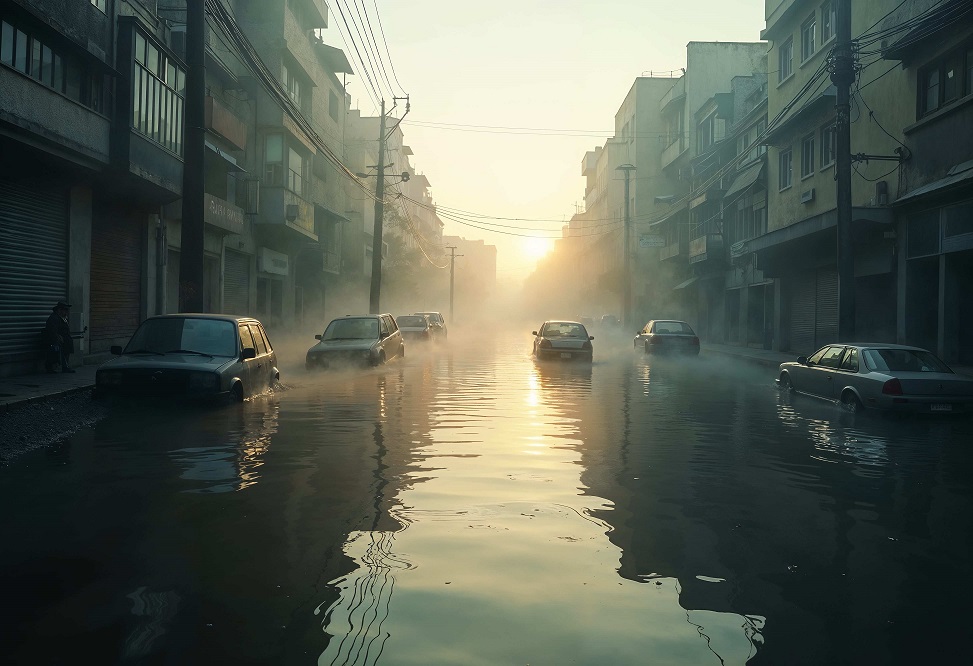
Across the Caribbean, flooding has become one of the most persistent and costly threats to sustainable development. From Kingston and Bridgetown to Castries, Roseau, Georgetown, and Port of Spain, urban centres are experiencing increasingly frequent inundation that disrupts commerce, damages infrastructure, threatens public safety, and imposes significant economic losses.
While climate change is often cited as the primary cause, the reality is more complex. Many flood events occur during routine seasonal rainfall rather than extreme storms or hurricanes. In numerous cases, the underlying causes are rooted in decades of land-use decisions, inadequate drainage planning, uncontrolled urban expansion, and the loss of natural systems that once managed stormwater effectively.
Port of Spain, Trinidad and Tobago’s capital city, provides a compelling case study of how Caribbean cities can either continue along an unsustainable path or embrace a new paradigm of flood resilience.
Port of Spain: A Warning for Caribbean Capitals
For almost two decades, Port of Spain has experienced severe flooding with alarming regularity, affecting the city almost annually, with significant inundation occurring as recently as June 2025.
These events have repeatedly disrupted transportation networks, interrupted commercial activity, damaged public and private property, and reduced productivity throughout the capital. Importantly, many of these floods have occurred during ordinary wet-season rainfall rather than exceptional weather systems.
The situation mirrors challenges faced throughout the Caribbean, where growing urban populations and expanding development have placed increasing pressure on infrastructure systems that were designed for much smaller communities and very different climatic conditions.
When Development Outpaces Infrastructure
One of the most significant contributors to urban flooding across the Caribbean is the imbalance between development and infrastructure investment.
In Port of Spain, major government developments and commercial expansion coincided with rapid residential growth in the surrounding valleys that once absorbed rainfall and which were transformed into housing developments, roads, parking areas, and other impermeable surfaces.
Unfortunately, drainage infrastructure did not evolve at the same pace.
The common engineering response was to widen, line, pave, and concrete existing waterways. While these interventions appeared to improve drainage, they often accelerated stormwater flows, delivering larger volumes of runoff to downstream areas in shorter periods.
This phenomenon is not unique to Trinidad and Tobago. Similar approaches have been adopted throughout the Caribbean, where drainage projects frequently focus on moving water away as quickly as possible rather than managing it within the watershed.
The result is a dangerous paradox: upstream improvements often create downstream flooding problems.
A Policy Problem More Than an Engineering Problem
Flooding is often viewed as a technical issue requiring larger drains, wider channels, or additional pumping stations. However, experience throughout the Caribbean demonstrates that the challenge is fundamentally one of governance, planning, and policy.
Engineers can design effective flood mitigation systems, but those systems require supportive policies, coordinated institutions, and long-term planning frameworks.
Many Caribbean countries continue to approve developments without requiring meaningful stormwater management measures. Environmental approvals often focus on preventing deterioration rather than achieving measurable improvements. Meanwhile, land-use planning, drainage management, environmental regulation, and infrastructure development frequently operate in isolation.
The consequence is a cycle of recurring flood damage followed by emergency response and short-term remedial works, without addressing the underlying causes.
Rethinking Flood Resilience
To create genuinely flood-resilient Caribbean cities, a fundamental shift in thinking is required.
Rather than focusing solely on drainage capacity, urban planning must recognize water as an integral part of the built environment. The objective should not be to remove stormwater as quickly as possible but to manage it where it falls and release it gradually into natural watercourses.
This requires two major policy reforms.
1. Make Space for Water
Development approvals should require the allocation of land specifically for stormwater management infrastructure.
Just as developers are required to provide roads, utilities, and public spaces, they should also provide facilities that reduce runoff and increase water storage capacity.
These may include:
- Detention ponds
- Retention ponds
- Vegetated swales
- Constructed wetlands
- Rain gardens
- Floodable public open spaces
Such facilities can simultaneously serve recreational, environmental, and aesthetic purposes while significantly reducing flood risks.
Across the Caribbean, valuable urban land is often viewed solely through a development lens. Future planning must also recognize the economic value of preserving land for flood mitigation.
2. Move Beyond “No Worsening” to “Net Improvement”
Many existing regulatory frameworks require only that post-development runoff does not exceed pre-development conditions. While this principle prevents further deterioration, it does little to solve existing flooding problems.
A more progressive approach would require new developments to achieve measurable reductions in stormwater discharge relative to existing conditions. For example, developments could be required to reduce peak runoff by at least 20 percent through on-site mitigation measures.
This approach transforms every new project into part of the solution rather than simply preventing it from becoming part of the problem.
Climate Change and Caribbean Resilience
Climate change introduces an additional layer of urgency. Scientific projections indicate that Caribbean nations will face increasingly intense rainfall events, rising sea levels, and more frequent weather extremes. Coastal cities such as Port of Spain face the dual challenge of managing increased runoff from upland catchments while simultaneously confronting reduced drainage efficiency caused by sea-level rise.
Consequently, flood resilience must become a central pillar of national development planning. Infrastructure investments, housing policies, environmental regulations, and urban planning strategies must all be aligned to create communities capable of withstanding future climatic conditions.
Conclusion
Port of Spain’s flooding challenges are not unique. They reflect a broader Caribbean reality in which urban development has often advanced faster than the systems needed to manage water safely and sustainably.
The lessons are clear. Flood resilience cannot be achieved through larger drains alone. It requires integrated planning, modern policies, innovative engineering, and the political will to act before disasters occur.
The Caribbean has an opportunity to rethink its relationship with water and to design cities that work with natural systems rather than against them. Flood resilience should not be viewed as an environmental expense. It is an investment in economic stability, public safety, infrastructure protection, and national competitiveness. Every dollar spent on resilience today can prevent many dollars of future losses
The choice facing our region is simple: continue responding to floods after they occur, or invest now in creating cities that are designed to live with water safely, sustainably, and resiliently.